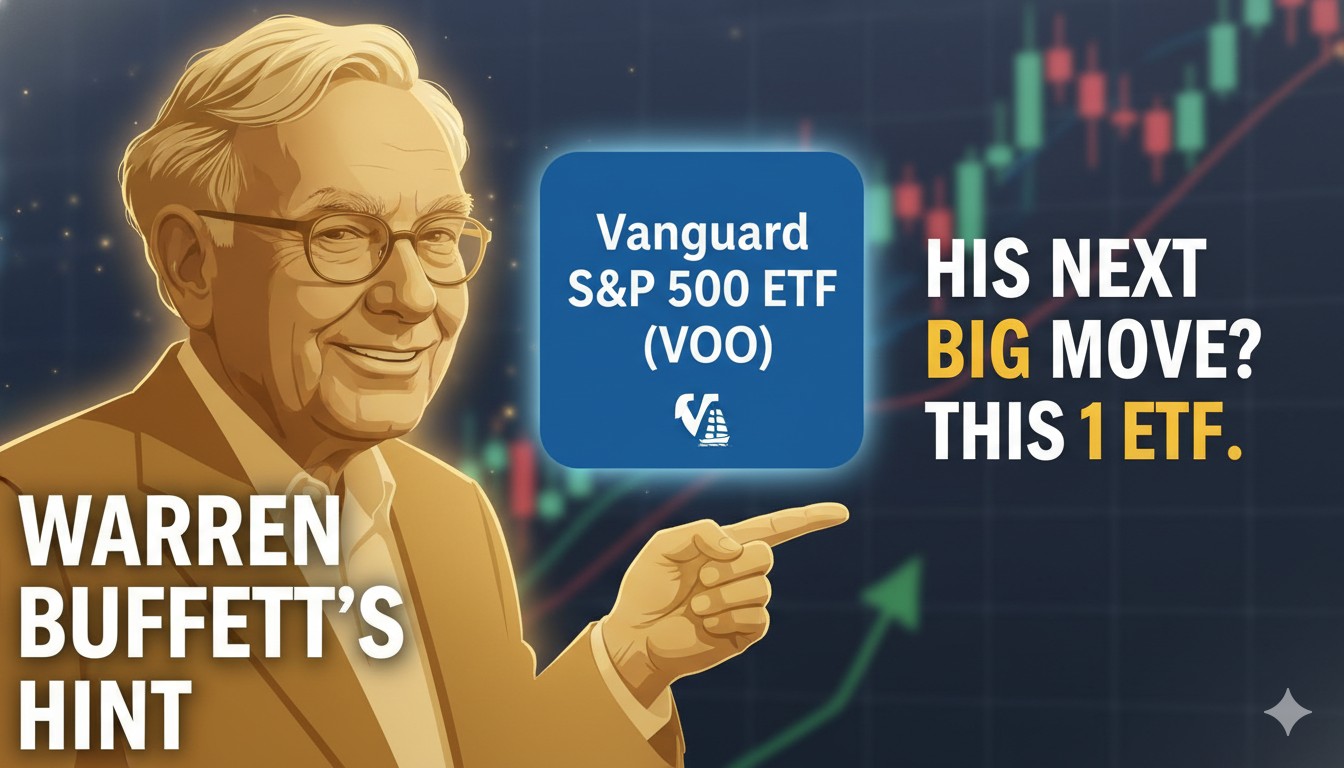
“Warren Buffett’s longstanding advice emphasizes a simple 90/10 portfolio split between a low-cost S&P 500 index fund and short-term government bonds for most investors; the Vanguard 0-3 Month Treasury Bill ETF (VBIL) aligns perfectly with the bond allocation due to its ultra-low expenses, focus on short-maturity Treasuries, and current yield around 3.6%, offering safety and liquidity in volatile markets.”
Warren Buffett has long advocated for straightforward investing strategies that prioritize low costs and broad market exposure over complex stock-picking. His guidance for the average investor boils down to allocating 90% of assets to a low-cost S&P 500 index fund and 10% to short-term government bonds. This approach minimizes risk while capturing long-term growth from American businesses.
The bond portion serves as a buffer, providing stability and income with minimal volatility. Short-term Treasuries, in particular, offer near-cash liquidity and protection against interest rate swings, making them ideal for preserving capital during uncertain times.
Why VBIL Fits Buffett’s Blueprint
The Vanguard 0-3 Month Treasury Bill ETF (VBIL) tracks the Bloomberg US Treasury Bills 0-3 Months Index, investing exclusively in U.S. Treasury bills with maturities under three months. This ETF embodies Buffett’s preference for safety and simplicity, as Treasuries are backed by the full faith and credit of the U.S. government, carrying virtually no credit risk.
With an expense ratio of just 0.07%, VBIL keeps costs razor-thin, aligning with Buffett’s emphasis on avoiding unnecessary fees that erode returns. Currently, the fund offers a SEC yield of approximately 3.64%, providing a steady stream of income distributed monthly. This yield reflects prevailing short-term rates, which remain attractive for conservative allocations.
Key Benefits of VBIL
Low Volatility : The ultra-short duration (average effective maturity of 0.1 years) shields the ETF from significant price fluctuations caused by interest rate changes, unlike longer-term bonds.
High Liquidity : Shares trade on major exchanges, allowing easy entry and exit, while the underlying Treasuries are among the most liquid securities globally.
Tax Efficiency : Interest from U.S. Treasuries is exempt from state and local taxes, enhancing after-tax returns for investors in high-tax jurisdictions.
Diversification Tool : In a 90/10 portfolio, VBIL complements equity exposure by acting as a cash-like reserve, ready for rebalancing or opportunistic buys during market dips.
Performance Overview
VBIL has delivered consistent results since its inception, focusing on capital preservation with modest growth from reinvested interest. Here’s a snapshot of its key metrics:
| Metric | Value |
|---|---|
| Net Asset Value (NAV) | $75.55 |
| SEC Yield | 3.64% |
| Expense Ratio | 0.07% |
| Average Duration | 0.1 years |
| Total Net Assets | $4.64 billion |
| 3-Month Return (NAV) | 0.97% |
| Year-to-Date Return (NAV) | 0.16% |
These figures highlight VBIL’s role as a reliable anchor, generating income without the drama of stock market swings.
Comparing to Alternatives
While individual Treasury bills can be purchased directly, VBIL offers convenience through diversification across multiple issues, automatic reinvestment, and no need for constant rolling over maturities. Compared to money market funds, it provides similar yields but with the added benefit of ETF tradability. For those following Buffett’s playbook, pairing VBIL with Vanguard’s S&P 500 ETF creates a hands-off, resilient portfolio.
Potential Drawbacks and Considerations
No investment is without trade-offs. VBIL’s yields could decline if short-term rates fall, reducing income potential. It also offers limited upside compared to equities or longer-duration bonds. Investors should assess their risk tolerance and time horizon, ensuring the 10% allocation matches overall goals.
Disclaimer: This article is for informational purposes only and does not constitute financial advice, investment recommendations, or endorsements. All data and opinions are based on publicly available information and may change. Readers should conduct their own research and consult qualified financial professionals before making decisions.