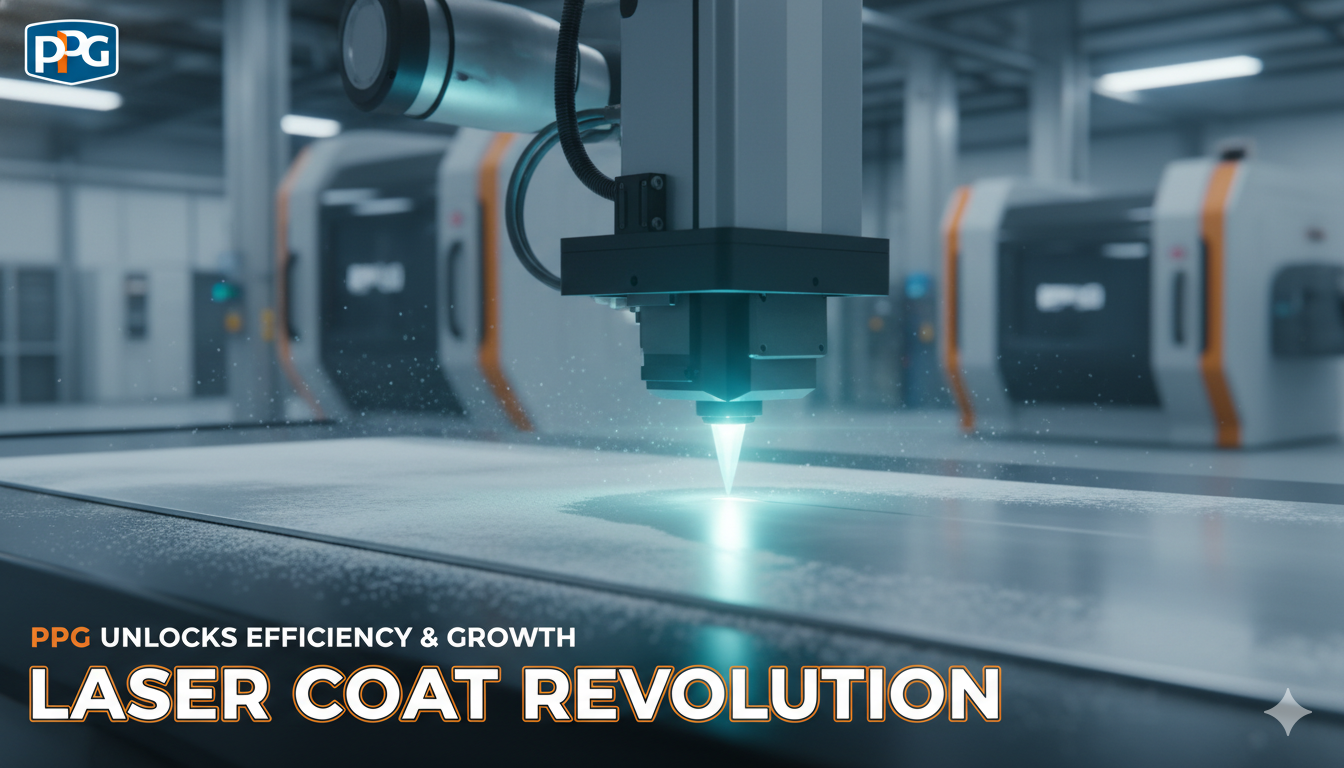
**” PPG Industries has launched pilot testing of revolutionary laser-based curing technology for powder coatings through a strategic collaboration with IPG Photonics and Whirlpool Corporation. The initiative features IPG’s PhotoniCURE™ system installed at PPG’s Strongsville, Ohio facility, aiming to slash energy consumption, cut curing times dramatically, lower costs, and reduce environmental impact while boosting production speeds in industrial finishing applications. “**
PPG Industries Advances Laser Curing in Powder Coatings
PPG Industries (NYSE: PPG), a global leader in paints, coatings, and specialty materials, is pushing the boundaries of industrial finishing with active testing of laser-cured powder coatings. This development centers on a groundbreaking partnership announced recently with IPG Photonics, the foremost expert in fiber laser technology, and Whirlpool Corporation, one of the world’s top home appliance manufacturers.
The core innovation lies in shifting away from traditional convection ovens, which rely on prolonged high-heat exposure to cure powder coatings. Conventional thermal curing often requires 10-20 minutes at peak metal temperatures between 130°C and 180°C, consuming substantial energy and heating the entire substrate along with the coating. In contrast, laser curing employs near-infrared (IR) light to directly initiate crosslinking—the chemical process that fuses powder particles into a tough, durable film. This targeted approach heats the coating preferentially, minimizing unnecessary heating of the underlying metal substrate.
PPG has installed a state-of-the-art pilot finishing line equipped with IPG’s PhotoniCURE™ laser curing system at its powder manufacturing and technical center in Strongsville, Ohio. Additionally, a laboratory-scale system supports ongoing research and feasibility studies at the PPG Coatings Innovation Center near Pittsburgh. These facilities enable comprehensive evaluation of the technology under real-world conditions.
Pilot trials are already underway, focusing on Whirlpool appliance components. Various powder formulations—both standard chemistries and those specially optimized for laser curing—are being tested across a range of parts. Early results highlight the system’s ability to cure coatings in minutes, representing a fraction of the time needed for traditional methods. This speed improvement directly translates to higher throughput on finishing lines, allowing manufacturers to process more parts per hour without expanding facility footprints.
Energy efficiency stands out as a major advantage. By concentrating energy on the coating surface rather than the bulk substrate, laser curing significantly reduces overall power requirements compared to thermal ovens or even conventional IR systems. This reduction in energy use not only lowers operational costs but also decreases carbon emissions, aligning with intensifying regulatory pressures and corporate sustainability goals across industries.
Cost savings extend beyond energy. Faster curing cycles shorten production times, reduce labor and maintenance associated with large ovens, and enable more flexible manufacturing. For high-volume sectors like appliances, automotive parts, general industrial equipment, and consumer goods, these efficiencies could drive substantial bottom-line improvements.
The technology’s compatibility is another key strength. It works seamlessly with existing standard powder chemistries while opening doors for next-generation formulations tailored to laser activation. This versatility ensures a smoother transition for manufacturers adopting the process without overhauling their entire material supply chains.
Key Benefits of Laser Cured Powder Coatings
Curing Time Reduction : From 10-20 minutes in ovens to minutes with laser, enabling 5-10x faster line speeds in potential applications.
Energy Savings : Targeted heating cuts consumption by focusing on the coating layer, potentially reducing energy use by 50% or more versus thermal methods.
Environmental Impact : Lower energy demand and emissions support greener manufacturing; reduced heat stress on substrates can improve part integrity.
Cost Efficiencies : Decreased utility bills, higher productivity, and potential for smaller equipment footprints lower overall finishing expenses.
Performance Quality : Maintains or enhances durability, adhesion, and finish aesthetics comparable to traditional curing.
This collaboration positions PPG at the forefront of a transformative shift in powder coating application. As pilot testing with Whirlpool progresses, the companies anticipate broader customer availability in the near term. Success in these trials could accelerate adoption across multiple sectors, where demands for faster, cleaner, and more cost-effective finishing continue to grow.
For PPG, this initiative complements its broader innovation strategy in sustainable coatings. The company has consistently introduced advancements in powder technologies, from high-durability primers to eco-friendly portfolios, but laser curing represents a step-change in process efficiency.
As industrial manufacturers face rising energy prices and stricter environmental standards, technologies like laser-cured powder coatings offer a compelling path forward. PPG’s hands-on testing and partnerships demonstrate a commitment to delivering practical, scalable solutions that drive both operational growth and sustainability.
Disclaimer: This article is for informational purposes only and does not constitute investment, financial, or professional advice. Market conditions can change rapidly.